How Carrier Unlocking Works: A Complete Guide for African Phone Resellers
By Timothy Munene on September 17, 2026
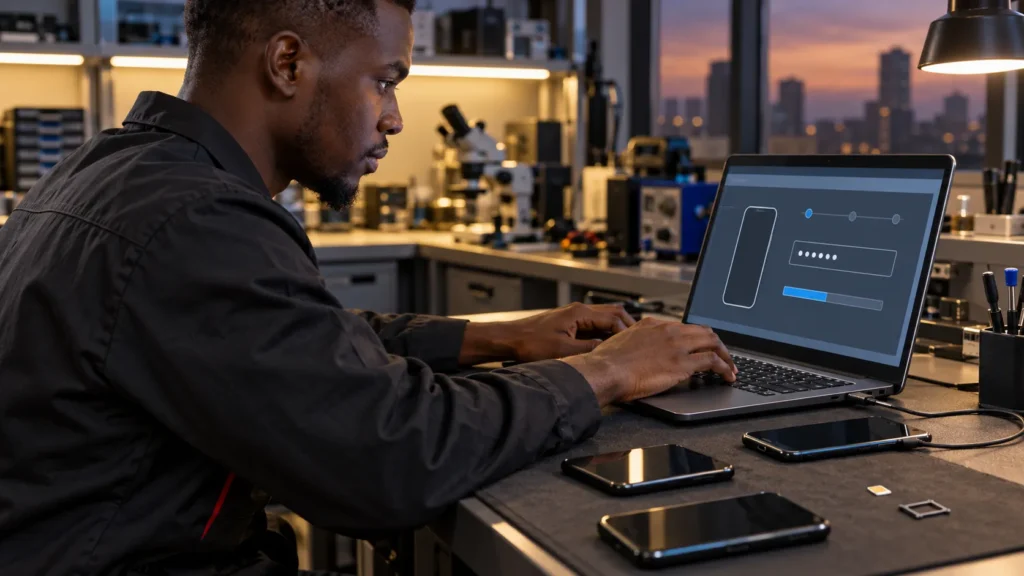
What Carrier Unlocking Actually Does
What Carrier Unlocking Actually Does
A carrier unlock service removes the restriction that ties a phone to one specific network, so the device can accept a SIM card from any compatible carrier instead of only the one it was originally sold with. For a GSM shop, this single change is often the difference between a device that sells quickly to any customer and one that sits in a drawer waiting for a buyer on the right network.
This matters in a particular way for resellers in Nigeria and Ghana. A large share of the used stock moving through markets in Lagos, Accra, and other trading hubs arrives locked to a foreign carrier, often from contract or financed plans overseas. Until that lock is removed, the phone’s usable buyer pool is limited to whoever happens to be on that one network, which is rarely the case for a local customer.
How the Unlocking Process Works, Step by Step
A carrier unlock service for GSM shops generally follows the same sequence regardless of the specific device:
- The device’s IMEI is submitted to check which carrier it is locked to and confirm eligibility for unlocking.
- The request is processed against the carrier’s own records, since eligibility and turnaround depend on that carrier’s conditions, not the unlocking service itself.
- An unlock code or remote unlock signal is issued once the request clears.
- The code is applied to the device, after which it accepts a SIM from any compatible network permanently.
Turnaround varies from a few minutes to a few days depending on the carrier and device model, but the process itself never requires opening the phone or making any physical or software modification. It is a network-side change, not a hardware one.
What Resellers Get Wrong About Carrier Unlocking
The most common mistake is assuming a locked phone is automatically a problem phone. It usually is not. Locked status is simply how most postpaid and financed devices leave their original market, and it says nothing about whether the device is stolen, damaged, or otherwise compromised. Confusing a carrier lock with a blacklist flag leads some resellers to reject perfectly good stock, or worse, to assume an unlocked phone is automatically safe to buy without running an IMEI check at all.
The second common mistake is unlocking a device before checking it. If a phone turns out to be blacklisted or reported lost, an unlock does nothing to fix that, and the reseller has spent time and money improving a phone that still cannot be resold cleanly. Running a full IMEI check first, then unlocking only stock that clears, keeps the order of operations working in the reseller’s favor instead of against it.
The third mistake is treating unlocking as a one-off task instead of a routine part of the buying process. Shops that build a carrier unlock service into every applicable purchase, rather than handling it case by case, move stock faster and avoid the pileup of locked phones that only sell to a narrow slice of customers.
Frequently Asked Questions
Is carrier unlocking permanent?
Yes. Once a device is genuinely unlocked, it stays unlocked regardless of which SIM card is inserted afterward or how many times the phone changes hands.
Does unlocking damage the phone?
No. The process changes a setting tied to the carrier’s own systems and does not involve opening the device, modifying its software beyond that single setting, or affecting the manufacturer warranty.
How long does carrier unlocking take?
Most requests complete within a few minutes to a few days. The exact timing depends on the carrier the device is locked to, not on the shop requesting the unlock.
Can you unlock a blacklisted phone?
Unlocking and blacklist status are separate systems. A phone can be successfully unlocked from its carrier while still being blacklisted, which means it may still be unusable on any network. Always run a blacklist check alongside any unlock request.
Is carrier unlocking legal in Nigeria and Ghana?
Yes. Carrier unlocking a device you own or have the right to sell is a standard commercial practice in both countries and is unrelated to the separate question of device registration or blacklist compliance, which follows its own set of rules.
The Bottom Line
Carrier unlocking is a routine network-side change, not a repair or a risk indicator, and building it into a standard step of the buying process is what lets GSM shops in Nigeria and Ghana sell to the widest possible customer base. Pairing it with an IMEI check before every purchase, and handling both through a single carrier unlock service, keeps the workflow simple and the stock moving. Resellers running this process at volume typically do it through a reseller account rather than one-off requests, since the discounted rate pays for itself quickly at any real sales volume.