How Volume Discounts Work for GSM Wholesalers
By Timothy Munene on September 2, 2026
Why Volume Pricing Exists for IMEI and Unlock Services
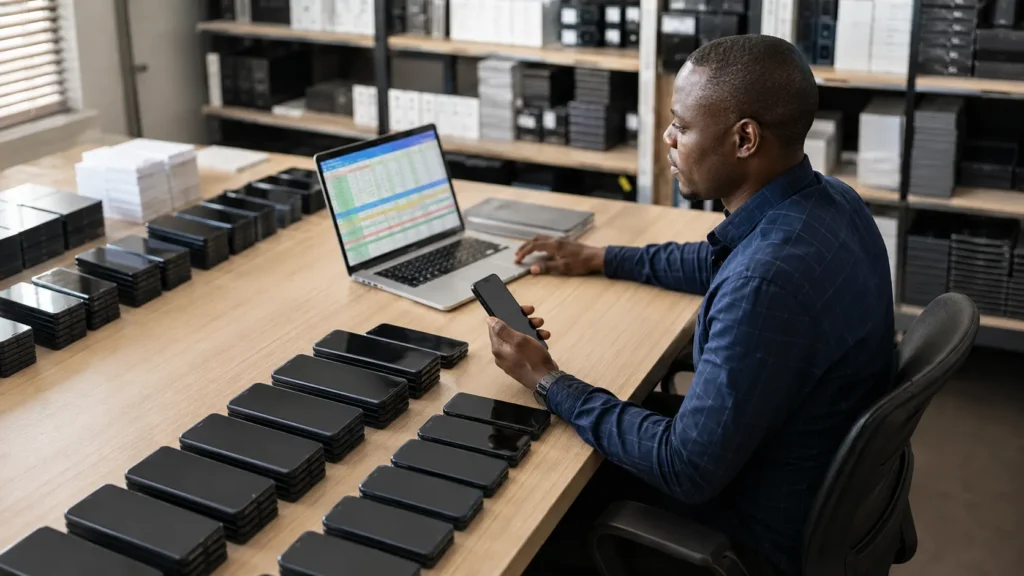
Running a single IMEI check or unlock on one phone costs roughly the same to process whether it belongs to an individual with one device or a wholesaler moving hundreds of units a month. What changes at volume is not the service, it is the economics behind it, which is exactly why tiered pricing exists. A wholesaler running fifty checks a day needs a materially lower per-check cost than someone running two a month, or the entire buying process stops making financial sense at scale.
Volume pricing is not a loyalty reward bolted on after the fact. It reflects the reality that verification needs to be a routine, built-in step in high-volume buying and reselling, not an occasional expense, and pricing has to support that without cutting into margin on every single unit.
How Tiered Pricing Actually Works
- Entry tier: suited to individual repair shops or small resellers checking devices occasionally, priced per check with no ongoing commitment.
- Professional tier: suited to active repair shops and small wholesalers running regular monthly volume, with a lower per-check rate than the entry tier.
- Partner tier: suited to established wholesalers and high-volume resellers, with the lowest per-check rate and the highest monthly volume threshold.
Movement between tiers is based on monthly usage, not a fixed contract length, so a business’s pricing scales in step with how much it is actually buying and selling, rather than locking it into a rate that stops matching reality.
What Changes in Practice as You Move Up a Tier
The most obvious change is the per-check cost, but the effect compounds across a full month of buying. A business processing five hundred devices a month is not paying five hundred times the entry-tier rate, it is paying five hundred times a meaningfully lower rate, which is often the difference between verification being a routine cost of doing business and it being a line item that gets skipped under pressure.
Higher tiers also typically come with dedicated support and faster response times, which matters more as volume increases, since a delay on a single check barely registers for someone buying two phones a month, but the same delay multiplied across dozens of daily transactions becomes a real bottleneck.
How to Decide Which Tier Actually Fits Your Business
- Track your actual monthly check volume for a full buying cycle before assuming which tier you need, rather than guessing from memory.
- Compare the total monthly cost at your real volume across tiers, not just the headline per-check rate, since a lower rate on a tier with a higher minimum commitment is not automatically cheaper.
- Factor in growth, not just current volume. A business that is scaling should weigh whether the next tier up pays for itself within a few months rather than waiting until volume has already outgrown the current tier.
- Revisit your tier periodically. Buying volume shifts with seasonality and business growth, and a tier that fit six months ago may no longer be the most efficient fit today.
Frequently Asked Questions
Do I need to commit to a contract to access a higher tier?
No, tier placement is based on actual monthly usage rather than a signed commitment, so pricing adjusts as your real volume changes rather than locking you into a fixed rate regardless of activity.
What happens if my volume drops below a tier’s threshold one month?
Tier pricing is designed to reflect ongoing usage patterns rather than penalize a single slower month, so occasional fluctuation does not immediately change your rate.
Is the discount only on IMEI checks, or does it apply to unlocking too?
Volume pricing applies across the core verification and unlock services, since wholesalers typically need both as part of the same buying and reselling process, not just one or the other.
How quickly can I move to a higher tier if my volume grows?
Tier upgrades are based on demonstrated usage, so a genuine, sustained increase in monthly volume is generally reflected quickly rather than requiring a long waiting period.
Is a higher tier worth it for a smaller repair shop that is growing quickly?
If your monthly volume is trending upward, it is worth comparing the cost at your projected volume, not just your current one, since the tier that fits today may already be more expensive than the next one up within a few months.
The Bottom Line
Volume pricing exists because verification needs to remain financially sensible at every scale, from a single repair shop checking a handful of phones a month to a wholesaler processing hundreds. Choosing the right tier comes down to matching your actual buying volume, not a guess, to the pricing structure that keeps checking every device the default, not an expense that gets skipped when things get busy.